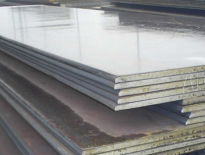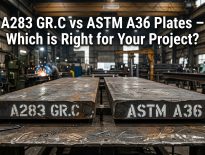
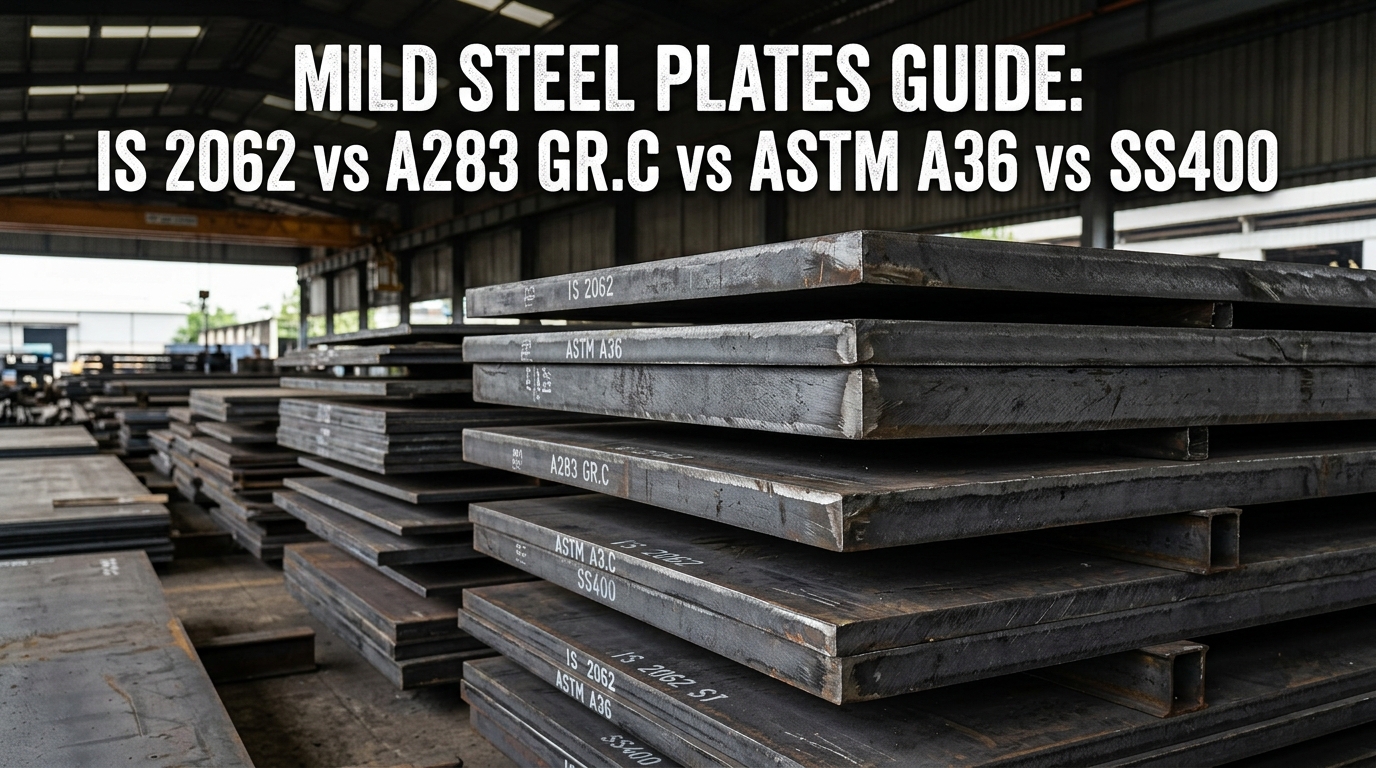
Triton is one of the leading stockiests & suppliers of Mild Steel plates from India catering to engineers, fabricators and procurement teams across domestic & international markets. We stock four commonly specified grades IS 2062, A283 GR.C, ASTM A36 and SS400. Each is made to a different standard and is suited to specific project conditions. Incorrect grade selection can affect weld quality, structural integrity, and project specifications. This is why grade selection needs to be given due attention at the time of procurement.
IS 2062 Steel Plates – Overview and Applications
IS 2062 is the primary Indian standard for structural steel, issued by the Bureau of Indian Standards. It covers hot rolled medium and high tensile structural steel plates for general structural and fabrication work throughout India. IS 2062 is the default specification for buyers sourcing Mild Steel plate in the Indian market.
In the standard, sub-grades are defined in terms of the impact and tensile strength requirements. The most procured variant is Grade E250, which covers a tensile strength range of 410 to 530 MPa and a minimum yield strength of 250 MPa for plates up to 20 mm thick. Maxed out at 0.22% carbon to allow for weldability without pre-heat in most conditions. IS 2062 plates are extensively used in bridges, industrial buildings, railway wagons, storage tanks, pipe supports all over India.
A283 GR.C Steel Plates – Overview and Applications
A283 GR.C Steel Plates are produced to an ASTM standard covering low and intermediate-tensile-strength Carbon Steel plates intended primarily for pressure vessel and general fabrication use. Grade C is the most specified sub-grade within this standard family.
Tensile strength ranges from 380 MPa to 515 MPa, and the minimum yield strength is 205 MPa (the lowest of the four grades covered here). Carbon is capped at 0.24%, with strict controls on manganese, phosphorus, and sulphur. These limits make A283 GR.C well-suited to low-pressure storage vessels, water and oil tanks, and general fabrication where formability and consistent weld performance matter more than peak load capacity.
ASTM A36 Steel Plates – Overview and Applications
ASTM A36 Steel Plates are the most widely recognized Mild Steel plate specification in international markets, particularly across North America and projects governed by American engineering codes. The standard covers carbon structural steel for use in bolted, welded, and riveted construction.
A36 carries a tensile strength range of 400 MPa to 550 MPa and a minimum yield strength of 250 MPa, placing it in the same general bracket as IS 2062 Grade E250. Carbon content is typically below 0.26% for plates under 20 mm and below 0.29% for thicker sections. A36 plates are easy to manufacture, widely available throughout the world and very weldable, making them a practical default for export orientated projects and buyers supplying to American engineering contractors.
SS400 Steel Plates – Overview and Applications
SS400 is a Japanese Industrial Standard (JIS G3101) structural steel grade used widely across Asia, particularly in Japan, South Korea, Southeast Asia, and export-driven fabrication markets. The designation “SS” stands for structural steel, and “400” indicates the minimum tensile strength in MPa.
The mechanical specification for SS400 is quite straightforward. The tensile strength is 400 MPa to 510 MPa and minimum yield strength is 245 MPa for plates up to 16 mm thick, decreasing slightly for thicker sections. Typical mill chemistry keeps carbon below 0.25%, leaving SS400 mechanically comparable to IS 2062 and ASTM A36 across most thickness ranges. It sees wide use in general structural fabrication, shipbuilding, and building components across Asian markets.
Comparison: IS 2062 vs A283 GR.C vs ASTM A36 vs SS400
The table below summarizes the key properties of all four grades side by side.
| Property | IS 2062 (E250) | A283 GR.C | ASTM A36 | SS400 |
|---|---|---|---|---|
| Standard Body | Bureau of Indian Standards | ASTM International | ASTM International | Japanese Industrial Standards |
| Tensile Strength | 410–530 MPa | 380–515 MPa | 400–550 MPa | 400–510 MPa |
| Min. Yield Strength | 250 MPa | 205 MPa | 250 MPa | 245 MPa |
| Max Carbon Content | 0.22% | 0.24% | 0.26% (≤20 mm) | ~0.25% (typical) |
| Weldability | Good | Good | Good | Good |
| Primary Use | Indian structural / fabrication | Pressure vessels / tanks | International structural | Asian structural / export |
| Common Industries | Infrastructure, railway, construction | Storage tanks, low-pressure vessels | Steel framing, machinery, export | Shipbuilding, building components |
All four grades share broadly similar mechanical properties. The primary differentiator is the governing standard and regional inspection regime.
How to Choose the Right Mild Steel Plate Grade
The correct grade is determined by the project specification, not buyer preference. Check the engineering drawing, specification sheet, or client’s material requirement document first.
The expected grade is IS 2062 if the project is located in India or is governed by Indian Standards. It is mandatory for government contracts, BIS-regulated fabrication, and domestic structural work. A36 is the default structural material for ASTM governed projects. A283 GR.C is used in the fabrication of pressure vessels and tanks where moderate strength and good formability are of prime importance. SS400 applies when the project is under a JIS specification, or the end-customer is in Japan, South Korea, or Southeast Asia.
Source Mild Steel Plates from Triton
Triton stocks all four Mild Steel plate grades from verified mill sources, with mill test certificates available for every supply. Standard and cut-to-size plates are offered in all thickness ranges. Our team can assist you with selecting the right grade, documentation requirements and export packaging.
To review our full stock range, visit our Mild Steel Plates product page. For specific grade enquiries, contact our sales team directly with your thickness, width, length, and quantity requirements.