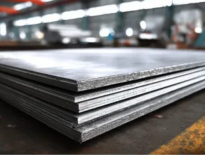
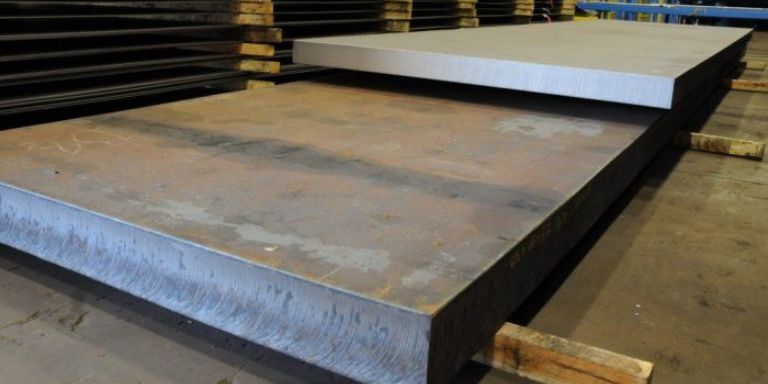
Cities keep building upward. Every added floor multiplies the load a structure must carry, and steel plates absorb that load without adding excess weight. This is why engineers turn to them for columns, beams, and connection points across modern skylines. Construction steel plates give a building the stiffness to resist wind sway and the strength to hold live loads across dozens of stories. Plate thickness, grade, and weld quality decide how a tower behaves during an earthquake or a sustained gale, not just how it looks on a drawing.
What Are Structural Steel Plates?
Structural steel plates are flat-rolled steel plates cut and shaped to bear loads, such as beams, columns, and connections. They are manufactured through hot rolling, which involves rolling steel slabs at a high temperature to a desired thickness and subsequent controlled cooling. Typical grades used for projects are ASTM A36, A572, or A588. These plates have high tensile and yield strength, excellent impact resistance, and will weld well on site.
Why Structural Steel Plates Are Essential for High-Rise Buildings
Tall structures demand more than ordinary steel sections can offer. Six factors explain why plates matter here.
High Load-Bearing Capacity
The more floors you build, the more stress you put on the columns below. This uniform load sharing over plates maintains the stress within tolerable limits.
Excellent Strength-to-Weight Ratio
A steel plate supports more load per unit weight of foundation than most alternatives, reducing the size and material use of the foundation.
Structural Stability Under Heavy Loads
Plates in columns and base connections hold shape under sustained compression, without creeping over decades of use.
Seismic and Wind Resistance
High-rise frames flex during seismic events and high winds. Ductile plates absorb that movement and return close to their shape.
Faster Fabrication and Installation
Get pre-cut, pre-drilled plates delivered from the mill, ready to bolt or weld, saving time on the job site.
Long Service Life With Minimal Maintenance
High-strength structural steel plates are durable and require minimal maintenance even under harsh environmental conditions, and are able to withstand fatigue under repeated loads.
Applications of Structural Steel Plates in High-Rise Construction
Steel plates appear throughout a high-rise frame, not just at the base. Ten common applications show their reach.
Building Columns
Plates form the core of built-up columns, carrying axial load from roof to foundation.
Structural Beams
Welded plate girders span long distances between columns, supporting floor slabs without added supports.
Base Plates
Base plates transfer column loads into the foundation, spreading force across a wider bearing area.
Floor Support Systems
Plates reinforce floor framing where mechanical or storage loads exceed standard slab capacity.
Transfer Girders
Transfer girders carry loads from columns above that do not align with columns below, common in podium designs.
Connection Plates
Gusset and splice plates join beams to columns, holding connections under shear and moment forces.
Bracing Systems
Diagonal bracing plates stiffen the frame against lateral sway, reducing drift during wind loading.
Core Wall Reinforcement
Embedded plates anchor concrete core walls to steel framing, tying the lateral system together at each floor.
Elevator Shaft Structures
Plates frame elevator shaft openings, carrying rail loads and guide bracket loads across the shaft height.
Rooftop Mechanical Support Structures
Rooftop equipment sits on steel plate platforms that carry vibration loads without stressing the roof deck.
Benefits of Using Structural Steel Plates
Plates offer many practical benefits that influence a project from design to completion, in addition to load capacity.
Enhanced Structural Integrity
Plates tie connections together under one continuous load path, reducing weak points across the frame.
Improved Construction Efficiency
Pre-fabricated sections reduce on-site cutting and drilling, helping to get buildings up and running quickly on tight projects.
Design Flexibility
The engineers shape plates into custom sections to meet the required load paths that standard shapes cannot match.
Excellent Weldability
Plates can be welded with most connections without preheating because they have a low carbon content and are alloyed with controlled amounts.
Durability in Demanding Environments
Coated grades, weathering, and coated grades resist coastal air, industrial exposure, and freeze-thaw effects.
Reduced Overall Building Weight
Steel structures with lighter steel frames have reduced foundation sizes, which reduces excavation costs and the quantity of foundation material.
Sustainable and Recyclable Material
At the end of a building’s life, steel plates can be recycled without losing structural properties.
Factors to Consider When Selecting Structural Steel Plates
Choosing the correct plate will have an impact on long-term performance. There are a number of parameters that must be taken into consideration by the engineers before they decide on the material to be used for the construction of a high-rise frame.
The grade of the plates will be related to yield strength and ductility and will be the same as that of the load path determined for each connection.
The thickness of the plate has an impact on the strength and heat input of the weld, appropriate without unnecessary weight.
The minimum thickness and grade are determined by load requirements, as undersized plates will not withstand cyclic stress.
Increased building height puts greater wind and seismic loads on the building, which requires a higher grade at the lower levels.
Pollutants in the environment (coastal air or industrial pollutants) influence the corrosion rate and the selection of coating.
Exposed facade plates can be galvanized or painted for corrosion protection and can last for a longer period of time.
Grade is based on fabrication or welding requirements; consider site conditions and cooling needs.
The specification meets applicable construction standards (e.g., ASTM or AISC).
Conclusion
In high-rise construction, materials that can bear loads without adding extra weight to the structure are essential. Structural steel plates meet this need by giving a tower, whether a column, beam, or connection, stability against wind, seismic motion, and years of use. The structure’s in-service performance depends on choosing the right grade and thickness for each application. Triton plates are used alongside structural steel plates in high-rise construction projects.