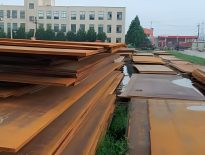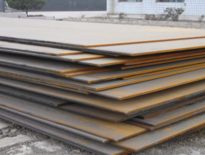

SS400 steel plates are one of the most common materials used in construction and manufacturing today. If you look at a large building frame, a bridge, or an industrial machine, there is a high chance you are looking at SS400 plates. These plates are known for being reliable, easy to work with, and affordable. Most of the world follows the JIS G3101 standard for these plates, making them a global staple for builders and engineers. Because they balance strength and flexibility so well, they have become the go-to choice for general structural work.
What Is SS400 Steel Plate?
SS400 steel plate is a type of mild carbon steel. The name itself tells you exactly what the material is designed to do. The “SS” stands for Structural Steel, and the “400” refers to its minimum tensile strength of 400 Megapascals (MPa).
Unlike high-carbon steels that are very hard and brittle, SS400 is a “mild” steel. This means it has a lower carbon content, which makes it much easier to bend, cut, and weld without cracking. These plates are typically made through a hot-rolling process. In this process, the steel is pressed at very high temperatures to reach the desired thickness and shape.
SS400 Plate Standards and Specifications
Applicable Standard – JIS G3101
The JIS G3101 standard comes from the Japanese Industrial Standards (JIS). It is the rulebook that defines how these plates must be made and what qualities they must have. While it started in Japan, this standard is now respected and used across Asia and much of the world. If you buy from an ss400 plates manufacturer, they will test the metal to ensure it meets these specific JIS requirements.
SS400 Plate Chemical Composition
The chemical makeup of SS400 steel plates is kept simple. Unlike specialized alloys, it doesn’t have large amounts of expensive elements. It mainly consists of iron with small amounts of Manganese, Phosphorus, and Sulfur. Because the carbon content isn’t strictly capped by a maximum percentage in the JIS standard (unlike some other steels), the focus is more on the final strength of the plate rather than a rigid chemical recipe. This simplicity is what makes it so cost-effective.
| Element | Max Percentage (%) |
| Phosphorus (P) | 0.050% |
| Sulfur (S) | 0.050% |
Mechanical Properties of SS400 Plates
The mechanical properties are the “muscles” of the plate. Carbon steel SS400 plates are designed to hold up under pressure. They have a reliable tensile strength range and a minimum yield point, which is the point where the metal starts to permanently deform. They also have good elongation, meaning the metal can stretch a bit before it actually breaks. This is vital for safety in buildings during earthquakes or heavy winds.
| Property | Value |
| Tensile Strength | 400 – 510 MPa |
| Yield Strength (≤16mm thickness) | 245 MPa (min) |
| Elongation (depends on thickness) | 17% – 23% (min) |
Available Dimensions and Thickness Range
You can find Mild steel SS400 plates in a huge variety of sizes. Most suppliers stock them in thicknesses ranging from thin 6 mm sheets all the way up to heavy 150 mm plates. Standard widths are usually 1500 mm or 2000 mm, with lengths reaching 6000 mm or more. If a project has unique needs, these plates are easy to flame-cut or plasma-cut to exact shapes. Manufacturers follow strict tolerance rules to ensure the thickness is consistent across the entire plate.
Key Properties of SS400 Steel Plates
Good Weldability
One of the best things about SS400 is how easy it is to weld. Because it has a low carbon content, you don’t have to deal with the metal becoming brittle or cracking near the weld joints. You can use standard techniques like MIG, TIG, or arc welding. For most standard thicknesses, you won’t even need to pre-heat the metal before you start. This saves a lot of time and money during the assembly of large structures like building frames or industrial platforms.
Excellent Formability and Machinability
If your project requires bending or shaping the steel, SS400 is an ideal choice. It is a “plastic” metal, meaning it can be bent into angles or rolled into cylinders without snapping. It is also very “friendly” to workshop tools. Whether you are drilling holes, milling a flat surface, or cutting it with a saw, the metal doesn’t wear down your tools too quickly. This makes it a go-to for parts that need precise fabrication.
Moderate Strength and Toughness
While it is classified as mild steel, it still packs plenty of strength for most structural needs. With a tensile strength between 400 and 510 MPa, it can hold up heavy loads in bridges and buildings. It also has good “toughness,” which is the ability to absorb energy and deform slightly rather than shattering under a sudden impact. This property is a huge safety plus in areas prone to high winds or ground movement.
Cost-Effectiveness and Availability
Budget is always a factor in big projects. SS400 is one of the most economical structural steels on the market. It doesn’t use expensive alloying elements like nickel or chromium, which keeps the price low. Because it is a global standard, almost every ss400 plates manufacturer will have it in stock. You won’t have to wait weeks for a special order, which keeps your project moving.
Surface Finish and Maintenance
Since these plates are hot-rolled, they come with a “mill scale” finish Ca dark, thin layer of oxide. This surface is quite durable and provides a good base for primer and paint. It is important to remember that SS400 is not naturally rust-proof. If you use it outdoors, you should plan to paint it or have it galvanized.
Applications and Uses of SS400 Plates
Construction & Infrastructure
This is the primary home for SS400. You will find these plates used as base plates for columns in warehouses. They are also used to make beams and various joints in bridges. Because they are easy to weld, crews can quickly assemble large frames on a job site.
Fabrication & Engineering
General workshops use SS400 for a million different things. It might be used to build a sturdy workbench, a machine guard, or a bracket for a large industrial fan. If a part needs to be tough but doesn’t need to withstand extreme heat or friction, SS400 is usually the first choice.
Automotive & Shipbuilding
In the automotive world, SS400 is often used for chassis parts or truck frames. In shipbuilding, it is used for internal structures that don’t come into direct contact with corrosive saltwater. It provides the “bones” for many large vehicles.
Storage Tanks & Equipment
Many low-pressure storage tanks, walkways, and support platforms are made from these plates. They provide a stable surface and can support the weight of heavy liquids or machinery without failing.
SS400 Plates vs Other Structural Steels
SS400 vs ASTM A36
The American standard equivalent to SS400 is ASTM A36. They are very similar, but A36 has a defined carbon limit, while SS400 focuses on the tensile test results. In most general projects, they are used interchangeably, though engineers will always check the local building codes first.
SS400 vs S235JR / IS 2062
In Europe, the equivalent is S235JR, and in India, it is IS 2062. All three are mild steels used for structural work. The main difference lies in the specific testing required for impact resistance. SS400 is widely used in Asian markets, while S235JR dominates European projects.
| Feature | SS400 (JIS) | A36 (ASTM) | S235JR (EN) |
| Origin | Japan | USA | Europe |
| Yield Strength | 245 MPa | 250 MPa | 235 MPa |
| Weldability | High | High | High |
Advantages of Using SS400 Plates
Using SS400 is a smart move for many projects. It is an economical structural solution that keeps costs down without sacrificing safety. Since it is a globally recognized standard, you can find it almost anywhere, which prevents project delays. The fact that it is so easy to weld and cut means labor costs are lower, too. It is a “no-fuss” material that works well in a massive range of environments.
How to Choose the Right SS400 Plate
When picking your plates, think about the load they will carry. Thicker plates are needed for heavy support, while thinner sheets work for panels or light frames. Consider the environment as well. Since SS400 is a mild steel, it can rust if left bare in the rain. You may need to paint or galvanize it if it will be outside. Always ensure you are getting plates from a reputable source that provides mill test certificates. This proves the steel actually meets the JIS G3101 requirements.
SS400 steel plates are the backbone of modern structural work. From their clear JIS G3101 standards to their impressive balance of strength and price, they offer a reliability that few other materials can match. Whether you are building a simple platform or a massive factory, these plates provide the steady support needed for long-lasting results. By choosing certified SS400 plates, you ensure that your project is safe, affordable, and built to last.