Steel plates are the base of most structural and manufacturing projects. From manufacturing sheds to heavy machine frames, the correct plate ensures strength, safety, and a long service life. MS Plate demand is increasing in infrastructure, railways, energy plants, and industrial projects. However, many customers get confused while choosing thickness, dimension and tolerance limitations. Even minor errors in these places can have an impact on load capacity, welding quality and overall cost. This document describes thickness ranges, standard sizes, tolerances, grades, and purchasing considerations in easy terms. It also discusses common mistakes and practical steps to follow before placing an order. The goal is simple: support accurate selection for safe and cost-effective structural work.
What Is an MS Plate?
An MS plate, or mild steel plate, is a flat steel product made with low carbon content, usually below 0.25 percent. The low carbon level gives it good ductility and weldability. It bends and forms easily without cracking. The basic composition includes iron with small amounts of carbon, manganese, and silicon. In terms of mechanical properties, it offers moderate tensile strength and good toughness for general structural use. This balance is ideal for construction, frames, supports, and foundation plates. Mild steel plates are more easily cut and weldable than high carbon or alloy steel plates. They are also less expensive for non-critical load applications that do not require high hardness.
Understanding MS Plate Thickness
MS plates are available in a wide thickness range, often starting from 5 mm and going beyond 100 mm. Thin plates are used for light fabrication and panels. Medium thickness plates suit structural beams, brackets, and frames. Thick plates are chosen for heavy load structures and machine bases. Thickness directly affects strength and load-bearing capacity. As thickness increases, bending resistance and rigidity improve. Selection depends on load calculations, span length, and design stress. Nominal thickness refers to the stated value, but actual thickness may vary within tolerance limits. Checking the actual measured thickness at delivery is important. Even small variation can change weight, cost, and structural safety.
Standard MS Plate Sizes Available in the Market
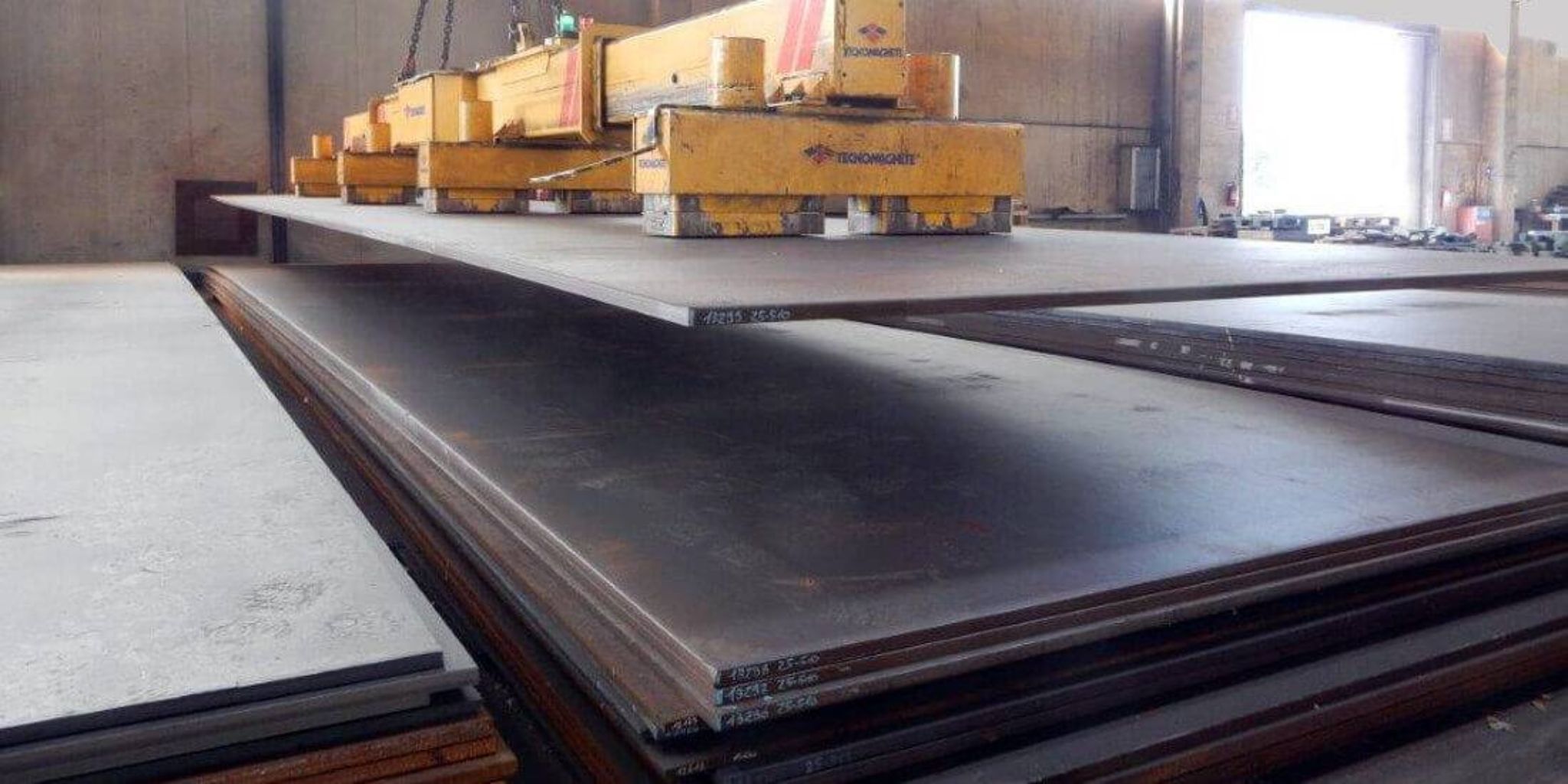
MS plates come in standard widths and lengths such as 1250 mm × 2500 mm and 1500 mm × 6000 mm. Larger plates available depending on mill capacity. Custom sizes can be supplied through cutting and profiling services. Plate weight is calculated using the formula: Thickness × Width × Length × Density. The density of mild steel is about 7.85 g/cm³. Accurate size selection reduces cutting waste and improves fabrication speed. In structural projects, even minor size errors may create fit-up issues during assembly. Choosing the right plate dimension helps to control material cost and ensures proper alignment at site.
What Are Tolerances in MS Plates?
Tolerance refers to the permitted variation from the given thickness or dimension. Thickness tolerance in steel plates is determined by standards such as IS or ASTM. These limits allow for natural variance during rolling and cooling. Tolerances are important because structural design assumes a minimum thickness. If the plate is thinner than expected, its load capacity reduces. Dimensional changes can affect welding gap and joint strength. Excess variation could require rework or rejection on-site. Industry standards clearly define allowable limitations based on plate thickness and width. Reviewing tolerance values before to purchase helps to avoid differences and ensures that design specifications are satisfied.
MS Plate Grades and Standards
MS plates are produced in different grades and standards. In India, IS 2062 is commonly used, with typical grades including E250 and E350. These grades have various yield strengths and impact values. ASTM A36 is another common grade used for international projects. Similar structural grades are defined in European standards as EN norms. Grade selection is determined by the project specification, load situation and strength requirements. Higher grades provide greater yield strength but may cost more. Mill test certifications affirm the chemical composition and mechanical qualities. Proper certification ensures that the provided material meets the necessary requirements and design codes.
Applications of MS Plates
MS plates serve many industries due to strength and ease of fabrication.
- Structural fabrication: Used in columns, beams, and base plates. They support buildings, sheds, and towers. Strength and weldability make them suitable for load-bearing frames.
- Construction frameworks: Common in bridges, walkways, and building supports. Plates form gussets and connection joints. They improve structural stability.
- Shipbuilding: Applied in deck panels and support sections. Good toughness helps handle stress and vibration. Surface coating protects against corrosion.
- Heavy machinery bases: Thick plates act as machine foundations. They reduce vibration and support high static loads. Accurate thickness ensures stability.
- Industrial platforms: Used in staircases, platforms, and access floors. Plates offer strong, flat surfaces for safe movement.
- Storage tanks and general engineering: Used in tank shells and covers. Easy welding helps in leak-proof joints. Also used in brackets and support parts.
Key Factors to Consider Before Buying MS Plates
Proper evaluation before purchase prevents cost overruns and safety risks.
- Required thickness and strength: Select thickness based on design load and stress values. Match grade with required yield strength. Avoid guesswork.
- Load and stress calculations: Review bending, shear, and impact loads. Engineering checks ensure correct plate selection.
- Surface condition (HR, CR): Hot rolled plates suit heavy structures. Cold rolled plates provide smoother finish for precision work.
- Certification and mill test reports (MTC): MTC confirms chemical and mechanical values. It supports quality control and inspection.
- Budget considerations: Higher grade or thicker plates increase cost. Balance safety and budget through proper design.
- Supplier reliability: Work with a trusted Mild Steel Plate supplier. Consistent quality and timely delivery reduce project delays.
Common Buying Mistakes to Avoid
Certain errors repeat across many projects. Awareness helps prevent them.
Ignoring tolerance variations: Overlooking tolerance can reduce actual thickness. This affects weight and structural capacity.
Choosing an incorrect grade: A lower grade may not meet strength demand. This leads to failure under load.
Overlooking certification: Lack of MTC creates risk during inspection. It may also delay project approval.
Not calculating the actual weight properly: An incorrect weight estimate affects transport and cost planning. Always verify with the proper formula.
Selecting suppliers based on price alone: A low price may indicate poor quality control. Material failure costs far more than initial savings.
How to Choose the Right MS Plate Manufacturer
Selecting the right MS Plate manufacturer requires a thorough examination of quality systems and supply capability. A reliable manufacturer adheres to strict quality control at each rolling stage. Chemical and mechanical testing are also part of the inspection process. The availability of standard and custom sizes allows for better flexibility for various projects. Compliance with IS and ASTM standards ensures product uniformity. On-time delivery promotes efficient project planning, particularly for export, or large infrastructure projects. Working with a reputable Mild Steel Plate supplier reduces the chance of nonconforming material. Clear documentation, prompt service and technical assistance demonstrate sound manufacturing practices and long-term dependability.
Conclusion
Thickness, size accuracy, and tolerance control define the performance of any MS plate in structural use. Correct grade selection ensures the required yield strength and safe load capacity. Dimensional accuracy supports proper fit-up and welding quality. Ignoring these factors may lead to structural risk and higher lifecycle cost. Careful review of standards, certification, and supplier capability protects project quality. For dependable results, partner with experienced MS Plate manufacturers who maintain strict quality checks and supply accurate material. Strong sourcing decisions today support durability, safety, and cost efficiency across long-term infrastructure and industrial projects.