Construction sites, shipyards, pressure vessel shops, and mining operations depend on steel plate. The material carries load, holds pressure, or fights corrosion, depending on the grade and thickness required by the project. If specifications are incorrect, failure shows up later, as a cracked weld or a failed inspection. Strength, corrosion resistance, weldability, and the governing standard narrow the choice among steel plate types, grades, and specifications.
What Is a Steel Plate?
A steel plate is flat-rolled steel starting at 3 mm thick, sold as cut pieces, which separates it from steel sheet. Heavy-duty grades run to 200 mm and beyond. Mills roll plate to standards such as ASTM, ASME, EN, IS, and JIS, fixing the composition and mechanical properties buyer can check against the mill certificate.
Types of Steel Plates and Their Uses
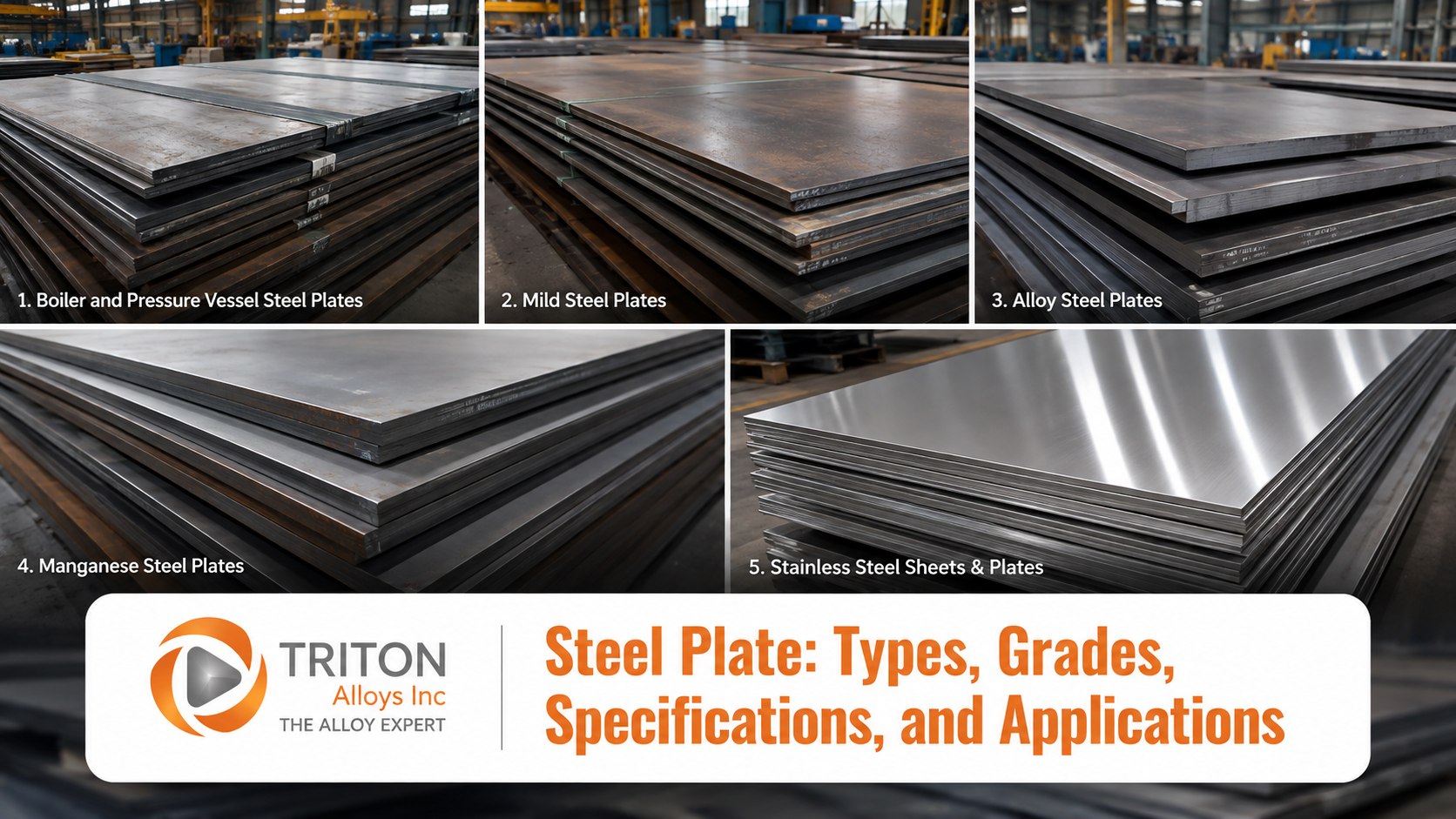
Six types cover most demand: mild steel for fabrication, carbon steel for pressure vessels, stainless steel for corrosion resistance, alloy steel for high-strength engineering, high tensile steel for bridges, and wear resistant plate for abrasive mining work.
| Steel Plate Type | Main Properties | Typical Applications |
| Mild Steel Plate | Good weldability | Construction |
| Carbon Steel Plate | High strength | Pressure vessels |
| Stainless Steel Plate | Corrosion resistance | Chemical & food industry |
| Alloy Steel Plate | High-temperature strength | Power & petrochemical |
| Wear Resistant Plate | Abrasion resistance | Mining & cement |
Steel Plate Grades and Specifications
Grade sets plate capacity, weld to, and remain operational. IS 2062 governs structural work in India, while ASTM A36 covers export contracts. ASTM A516 serves pressure vessel plates, and ASTM A572 covers high-strength low-alloy sections. European buyers use S235, S275, and S355, which indicate minimum yield strength in MPa.
Quick Comparisons
IS 2062 vs ASTM A36: IS 2062 suits Indian projects; A36 suits international ones.
| Property | IS 2062 | ASTM A36 |
| Yield Strength | Varies by grade | Fixed minimum |
MS vs SS plate: mild steel costs less; stainless steel resists corrosion far better.
| Feature | MS Plate | SS Plate |
| Best Applications | Structural | Chemical & food |
Hot rolled vs cold rolled: hot rolling costs less; cold rolling gives tighter tolerance.
| Feature | Hot Rolled | Cold Rolled |
| Typical Use | Structural | Precision engineering |
How Steel Plate Is Manufactured
Producers select raw material to match the grade, melt and refine it, then cast it into slabs. Hot rolling reduces the slab to final thickness, heat treatment follows where the grade needs it, and cutting, finishing, and inspection close the process.
Thickness, Weight, and Checkered Plate
Thickness determines what a plate is capable of.
| Thicknesses | Common Applications |
| 3-6 mm | Fabrication |
| 8-12 mm | Structural steelwork |
| 16-25 mm | Heavy engineering |
| 30 mm+ | Pressure vessels & industrial equipment |
Weight follows length x width x thickness x 7.85 (steel’s density in g/cm³), a figure buyers use to plan transport. For flooring, checkered plate adds a raised pattern for slip resistance; plain plate remains the choice for structural work.
Applications Across Industries
Steel plate shows up wherever a structure bears load or holds pressure: beams and foundations in construction, hulls and decks in shipbuilding, pipelines and boiler casings in oil, gas, and power, and buckets and liners in mining. The grade varies by industry, but the demand for tested, certified material remains constant.
How to Choose the Right Steel Plate Grade
Match the plate to the job before comparing price:
- Load the plate must carry
- Operating environment and chemical exposure
- Weldability and required mechanical properties
- Service-life corrosion resistance
- Governing industry standard
- Thickness against intended use
- Material test certification
Steel Plate Price per Kg: What Drives Cost
Grade, thickness, and dimensions set the base price; alloy composition, rolling process, and heat treatment add to it. Market demand, order quantity, and domestic versus imported sourcing move the final number, sometimes by 10 to 15 percent between suppliers quoting the same grade.
Standards, Certifications, and Quality Testing
Request a Material Test Certificate on every order, confirming composition and mechanical properties against ASTM, ASME, EN, IS, or ISO requirements. Ultrasonic testing and dimensional inspection identify flaws a visual check would miss.
Common Mistakes to Avoid
- Choosing a grade without checking real requirements
- Skipping standards and certification checks
- Choosing the wrong thickness for the load
- Buying on price alone, ignoring supplier quality
Conclusion
Choosing the right steel plate means matching grade, thickness, and specification to the project. That match protects weld integrity and safety long after the invoice is paid. Compare grades against the governing standard, ask for material certification, and buy from a supplier that carries tested, traceable material. Triton Alloys supplies quenched and tempered, stainless, high-strength, HIC, and alloy steel plates to buyers who need that assurance on site.