
Nickel Plate: Composition, Properties, and Industrial Applications
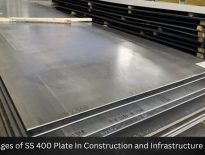
Nickel plate resists corrosion in caustic alkalis and hydrofluoric acid, while also maintaining conductivity that is high enough for electrical and battery components. That combination is why manufacturers in aerospace, chemical processing, and electronics continue to specify it over cheaper alternatives. Nickel alloy plate, most commonly grades Nickel 200 and 201, forms the backbone of equipment that has to survive both chemical attack and mechanical stress.
Buyers turn to nickel plates for three recurring jobs: containing corrosive chemicals, conducting electricity in demanding equipment, and holding shape under heat that would soften ordinary steel. Chemical processing, aerospace, marine engineering, and electronics account for most of the demand. Anyone researching nickel plate applications wants one answer: will this material hold up in my specific environment and at what thickness?
What Is Nickel Plate?
Manufacturers roll nickel plate from commercially pure wrought nickel: Nickel 200 (UNS N02200) or its low-carbon variant, Nickel 201 (UNS N02201). Nickel 200 contains a minimum of 99.6% nickel. Nickel 201 caps carbon at 0.02%, which prevents graphitization once the plate operates above 315°C (600°F).
Both grades stay ductile and ferromagnetic, with thermal and electrical conductivity that outperforms most structural metals. Nickel Alloy plate is best known for its ability to resist corrosion. It withstands caustic alkalis even at molten concentrations, resists stress corrosion cracking in chloride salts, and holds up in anhydrous hydrofluoric acid. ASME’s Boiler and Pressure Vessel Code, Section VIII, approves Nickel 201 for pressure vessel service up to 1250°F (677°C).
For fabrication, nickel plate hot-works between 1200°F and 2250°F, with heavy forming reserved for temperatures above 1600°F. Annealing runs between 1300°F and 1600°F, and soak time at that temperature shapes the final grain structure and strength.
Understanding the Nickel Plating Process
Nickel plate and nickel plating solve similar problems differently. Plating electrodeposits a thin nickel layer onto another metal’s surface: the workpiece gets cleaned and degreased, then immersed in a nickel-ion solution while an electric current draws nickel onto it, followed by a polish pass. Solid nickel alloy plate carries that same corrosion resistance through its full thickness instead of a surface layer, which matters when a part faces machining, welding, or heavy wear.
Benefits of Nickel Plate
- Resists caustic alkalis, hydrofluoric acid, and chloride-based stress corrosion cracking
- Maintains strength and ductility from cryogenic temperatures up to 1250°F
- Combines high electrical conductivity with high thermal conductivity
- Hot-works and cold-works using standard forming and welding techniques
- Performs in both reducing and oxidizing environments once a passive oxide layer forms
Industrial Applications of Nickel Plate
- Chemical processing: caustic soda evaporators, reactor linings, and piping exposed to alkalis
- Aerospace and marine: components needing corrosion resistance in salt and high-humidity environments
- Electronics and batteries: connectors and casings that need stable, low-resistivity conductivity
- Food processing: equipment handling brine, fatty acids, and fruit juices
- Pressure vessels: Nickel 201 plate rated for high-temperature ASME-code service
Choosing the Right Nickel Plate Supplier
Match the grade to the operating temperature first. Nickel 200 works below 315°C; above that, Nickel 201 avoids embrittlement. Ask any supplier for mill certification, thickness tolerances, and dual-certified 200/201 stock if your project needs flexibility on both grades.
Conclusion
Nickel plate is recognised in demanding equipment because it provides corrosion resistance and conductivity through its full cross-section, not just on a coated surface. Matching the grade, Nickel 200 or 201, to your temperature and chemical exposure determines how long that equipment lasts. Triton Plates supplies certified nickel alloy plates cut to the tolerances specified for your project.